DESTINATIONCAMP 2011
THE destinationcamp and the subline "workshop"
"Actually..." is how I could start this post. "Actually, BarCamps don't have a subline." Yes, that's true; actually. And I always look forward to every phone call, every negotiation, every discussion when my counterpart starts with "actually." Because then they're saying: In principle, it's this way, but it can also be different.
“Actually” also means that something might conform to an unwritten rule and perhaps isn't expected to be otherwise by the majority. And it has repeatedly shown that precisely what is “actually” not expected can lead to success. And that brings us to the point: "Actually," DestinationCamp is not a classic BarCamp – and this is quite deliberate.
DestinationCamp should not be seen as a hybrid format. And certainly, we don't want to "reinvent the wheel." I'd like to compare the original idea and the resulting concept with my very active time in equestrian sports: throughout the year, there were many courses and development events. The more squads you belonged to, the more frequently you attended courses. This was definitely good, as you had the chance to train and learn from renowned and experienced individuals. However, the trainers' views were sometimes very different – one taught in conferences, the other in BarCamps. And consequently, I completely changed my riding style from one trainer to the next. That this was highly irritating not only for me but especially for my equine partner is self-explanatory. Success was no longer there – at least not as it should have been. Eventually, I realized that not every trainer, when viewed individually, provided the right tips and tricks, but rather that one had to take home from each what suited both horse and rider – a little more each time, and piece by piece, an addition. Thus, the advantages of conferences and BarCamps were combined. With the difference that it wasn't an undifferentiated hybrid, but many other factors played a role.
And that's exactly what we're trying to do at DestinationCamp. To leverage the advantages of both event types and yet not create a typical mix, but to bring additional factors into play. Shortly after ITB, there will be a survey, not to offer a platform to a few (somewhat casually put) eloquent speakers to present themselves and their approaches, nor to impose a rigid program on participants beforehand. The survey aims to capture the industry's mood (and by that, everyone from service providers to tour operators to tourist information staff is asked) and identify current "hot topics." These form the guardrails of the event – they define the thematic areas.
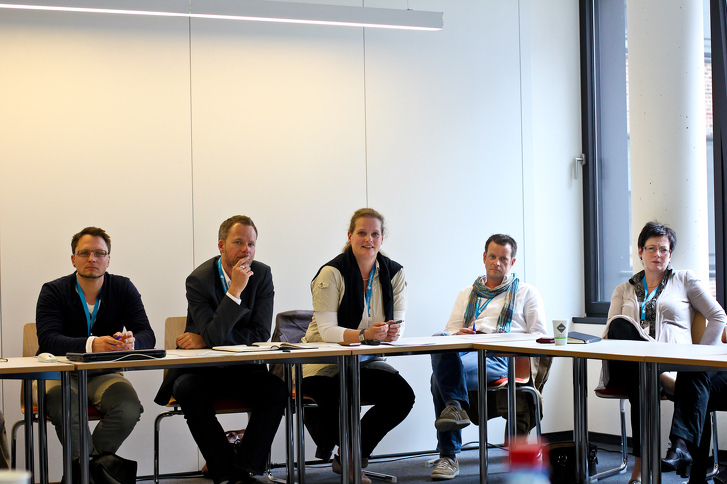
Within the thematic areas (guardrails), participants are encouraged to work actively and with an “open-space character,” to tinker, to forge ideas – to be in a “workshop” for 2.5 days. And participants are more in demand than ever, because through the (albeit reserved, but nevertheless very important) moderation of the sessions, all participants are encouraged to contribute, in order to build the desired results on an interplay of many small tips and tricks from very different trainers, thereby guaranteeing a solid foundation for long-term success.
Perhaps as an addition: The name "DestinationCamp" was chosen very deliberately. The creative potential of BarCamps should be fully utilized – while simultaneously broadening the thematic focus and increasing the professionalization of results processing. And: the event is not called "DMOCamp"! Rather, it's about many cogs needing to interlock for a functioning destination, so that the "Project Guest" is and remains sustainably successful. That's why we want to unite everyone at DestinationCamp:
- the public tourism industry
- Tourism associations
- private and municipal tourist information centers
- Tour operators and travel agents
- tourism service providers - hotels and hospitality
- Agencies and system houses as well as
- Institutes and universities.
Professionals and executives, department heads and project managers, are invited to spend 2.5 days discussing, evaluating, and developing measures for the industry's key issues. Above all, they should creatively and future-orientedly formulate recommendations for action, guided by the motto "Without the WE, the I is nothing", all while ensuring the fun isn't overlooked – just like in a real workshop.