DAY 2 #DCHH17
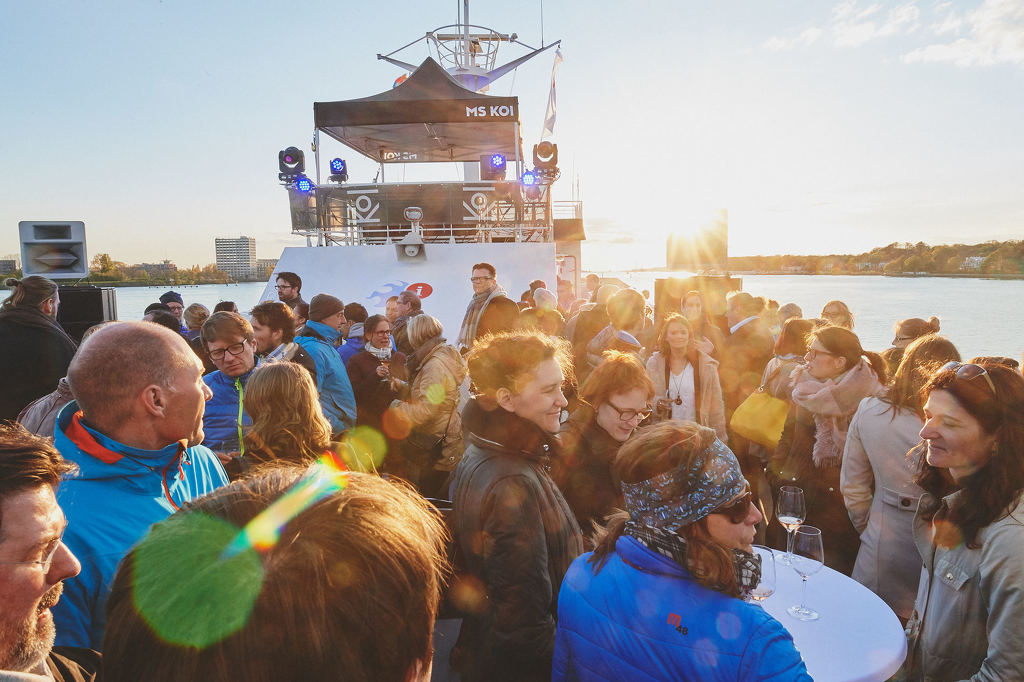
Work hard - party hard
Twelve experts moderated 18 two-hour sessions across six thematic groups – the second day of DestinationCamp, as usual, was entirely dedicated from morning to evening to discussions, expert talks, group work, round tables, and for the first time, systemic constellations. The evening event aboard the MS KOI offered a well-deserved after-work celebration as a four-hour cruise on the Elbe.
In the strategy workshops led by Cornelius Obier and Mathias Burzinski, it was discussed whether tourism strategies and concepts are even necessary to successfully manage a destination. Strategy, it was argued, could also be too rigid a corset. On the other hand, a change in strategic processes and more information about useful tools were called for. Furthermore, cross-country strategic coordination of tourism was deemed necessary.
The three sessions led by Dirk Schmücker and Achim Schloemer focused on digitalization in the world of work and tourism. They stated that digitalization opens up unprecedented opportunities for change, yet no one definitively knows what or how to change. However, DMOs need the courage to change. It is crucial to secure local value creation. It is "more important to develop an awesome product than to poorly imitate cool systems from professionals." Above all, the desires and wishes of guests should be linked with the strengths of the region. Digitalization is a means to an end for this, but it does not inherently create feelings of happiness.
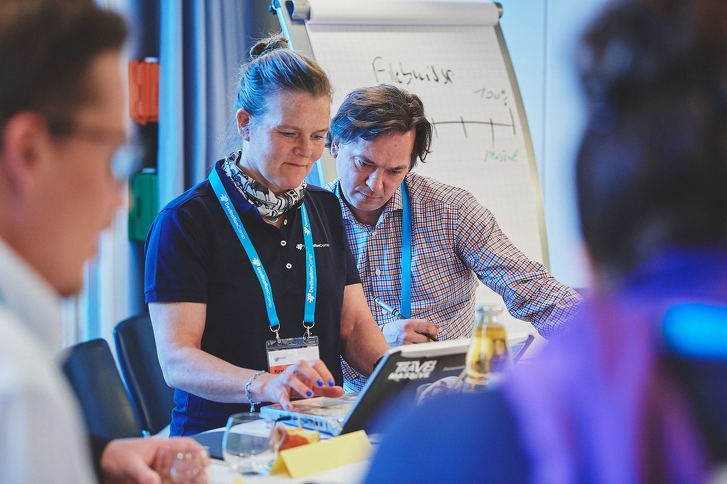
Under the theme Clarity through Insight, Uwe Frers and Ilka Leutritz analyzed with their session participants the success recipes of startups and their transferability to destinations. They questioned how to deal with conflicting demands for "strict" data protection and added value through data sharing, and how to build reliable digital data relationships. With structured content and digital services, a destination can score points in competition. However, the development of digital infrastructure often lacks the right mindset, tech know-how, leadership skills, strategy, and clear objectives.
The sessions led by Claudia Brözel and Kirsi Hyvaerinen focused on "free thinking and free speech" at the Magic Round Table. The core theme in the first round was the dynamic between "Dramaturgy – Feeling – Experience – Staging." Tourism, it was argued, should be identity-forming. In the second session, the statements predominantly revolved around the topics: "View of Humanity – Corporate Culture – Organizational Development." The latter, it was noted, is virtually non-existent in tourism. In the afternoon session, "W3 - Women Working the World," the contributions focused more on "Self-confidence – Strengths – Quota – Network." Conclusion: Feminism is still important – but has a different character today.
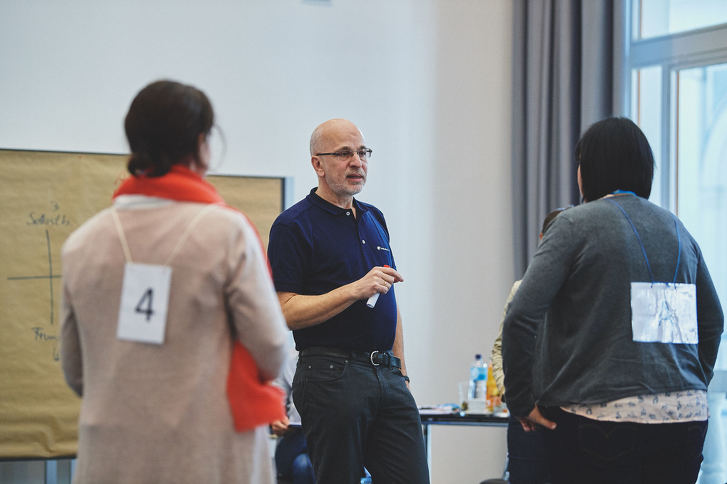
"Making the hidden visible" was the motto of the systemic constellations led by Georg Müller-Christ and Sybille Wiedenmann. Their three sessions focused on organizational systems, destinations, and one's own inner system. Topics included the dynamics between goals vs. resources, competition vs. cooperation, or me against the others. And the realization that a changed positioning in space can also promote the well-being of other actors. The two moderators imparted to participants a special sense for the mental effects of one's position within a web of relationships in an organization or destination. If the constellation is changed, the "mental maps" of those involved reinterpret the relationships.
The agenda for Ulrich Kastner and Gunar Bergemann featured concrete issues under the keyword Sales 4.0: DMOs face a high technological dependency that they can structurally and content-wise hardly meet. Nevertheless, it is crucial to retain marketing control and secure transaction sovereignty for service providers. This also includes better offers for year-round demand. While machines could replace all structured work roles in the foreseeable future, they cannot replace empathy towards the guest. The major challenge is to prepare for completely changed work situations and to develop creativity in new roles.
While damp, gloomy weather still hung over Hamburg in the morning, the sky gradually cleared up. When over 200 participants boarded the party ship MS KOI behind the Fish Auction Hall at 7 PM, it was still windy and cool, but the sun shone from a blue sky.
The event ship from Adler-Schiffe GmbH, based in Sylt, already hinted from the outside that at least one surprise awaited on board. What came next, however, elicited numerous 'aahs' and 'oohs' from most tourism professionals: It was breathtaking what designers and interior architects had made of an almost 40-year-old ferry. The Denmark ferry was built at the Husum shipyard in 1980. In 2005, the Sylt shipping company Adler-Schiffe took it over, converted it into an excursion ship, and sailed with it as "Adler-Dania" through the North and Baltic Seas. In 2014, it eventually became the party ship MS KOI with an exclusive event landscape across three decks.
Panem et Salis served stylish buffets: Thai Curry, Peppered Roast Beef, Shrimp and Cod Parcels, handmade pasta, and a special cheese selection as a midnight snack. The sun set kitschily beautiful behind the Elbe riverbank, and Vargo enchanted the atmosphere with his popular electronica world hits, compilations, and film music. To the sound of Clair de Lune from the Oceans 11 soundtrack, the MS Koi sailed past the nightly illuminated Elbphilharmonie and returned to the Fish Auction Hall around midnight.
And here is the video summary of Day 2! The 2017 video documentation is presented on the second day by Scaltel, GEIOS, and HRS Destination Solutions: