
DSTNCMP-PREMIUMpartner


Düsseldorf is a city where one always feels connected – with the world and with each other. Because in the only major German city that still carries 'Dorf' (village) in its name, the feeling of great closeness and community combines with the opportunities of a metropolis to create a unique urban lifestyle.
Düsseldorf is located in the heart of North Rhine-Westphalia, Germany's most populous federal state. From here, it's just a stone's throw to neighboring cities along the Rhine and Ruhr, such as Cologne, Essen, Dortmund, or Bonn. In this '10-minute city', everything is close by and easily accessible by public transport or on foot – it takes just 10 minutes to get from the airport to the city center or from the main train station to the Rhine. More than 300 trains stop daily in the state capital.
Rhenish way of life and international flair – what at first glance appears to be opposites, Düsseldorf skillfully combines. Top-tier museums meet urban art, high fashion meets second-hand and concept stores, and Altbier and Halve Hahn meet ramen and sake. In the Little Tokyo district, the heart of Europe's third-largest Japanese community, locals, business people from all over the world, young manga fans, and foodies meet. Numerous green spaces crisscross the city and, together with the Rhine, form a blue-green ring of 158 hectares around the city center: an organic structure that grows from the ground like the foundation of a green pyramid, and a band of flowers and parks.
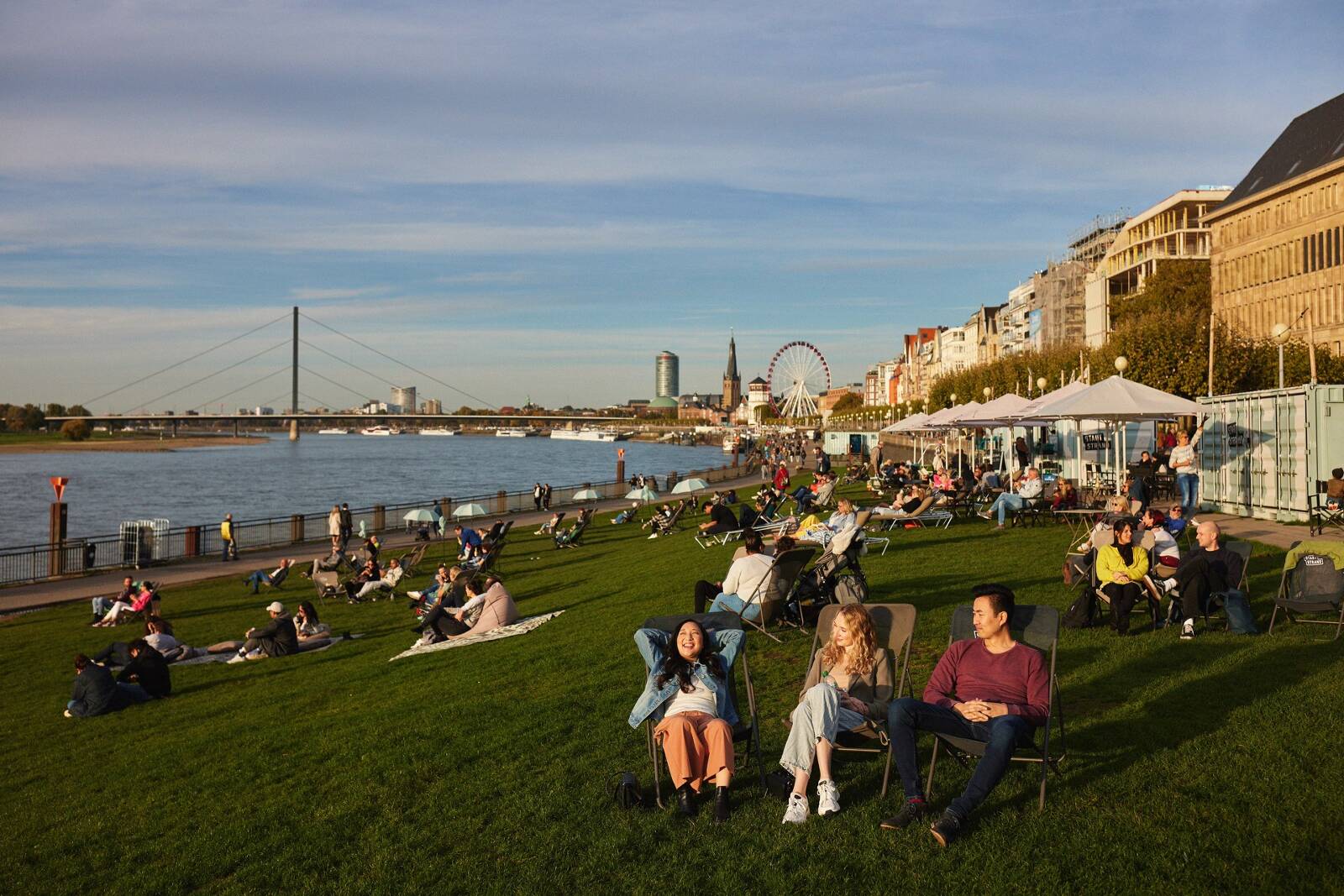
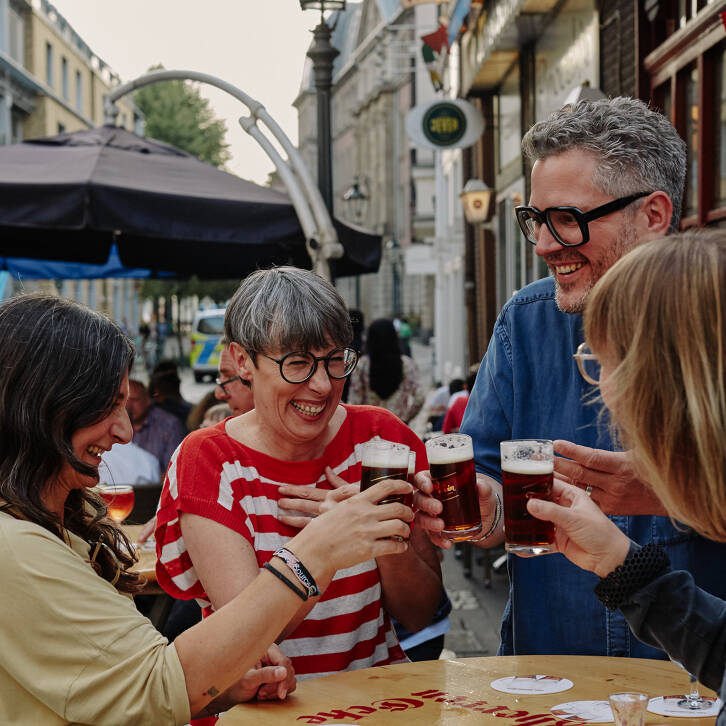
In Düsseldorf, you quickly feel at home. Over an Altbier in one of the traditional breweries, or during a sundowner on the Rhine steps, conversations quickly arise: The perfect blend of big-city flair and Rhenish joie de vivre is palpable everywhere.
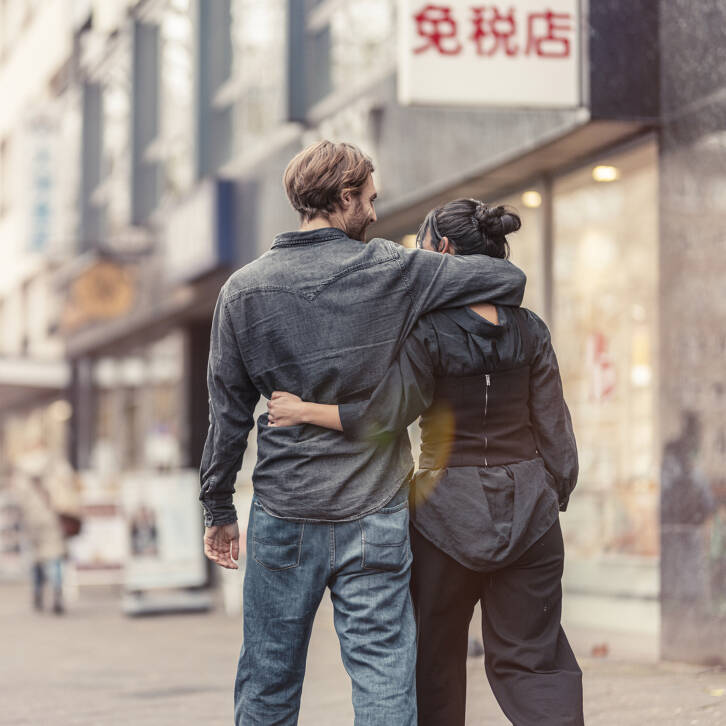
Nowhere else in Europe is Japanese life as concentrated as in the Little Tokyo district near the main train station, around Immermannstrasse. Ramen bars, restaurants, snack bars, and bakeries seamlessly line up one after another.
The authentic cuisine particularly attracts locals and visitors on weekends, leading to queues outside the shops – but the wait is worth it.
But Japanese life here isn't just about culinary experiences: Supermarkets offer everyday items, tea shops have everything for the perfect tea ceremony, and well-stocked retailers offer meticulously crafted items like silk kimonos or sashimi knives. In the oldest Japanese bookstore outside Japan, manga fans revel in Japanese literature, films, and comics. The beginning of Immermannstrasse is adorned with street signs in both German and Japanese.
Those who wish to escape the hustle and bustle of the big city can find tranquility in the EKŌ-Haus on the other side of the Rhine, in Niederkassel. The building, constructed in traditional architectural style, is a religious and cultural center. Here, interested individuals can learn calligraphy or Ikebana, the Japanese art of flower arranging, in courses, or attend a tea ceremony. The Japanese Garden in Nordpark is particularly popular with cosplayers. It exudes a unique atmosphere and invites visitors to relax and contemplate.


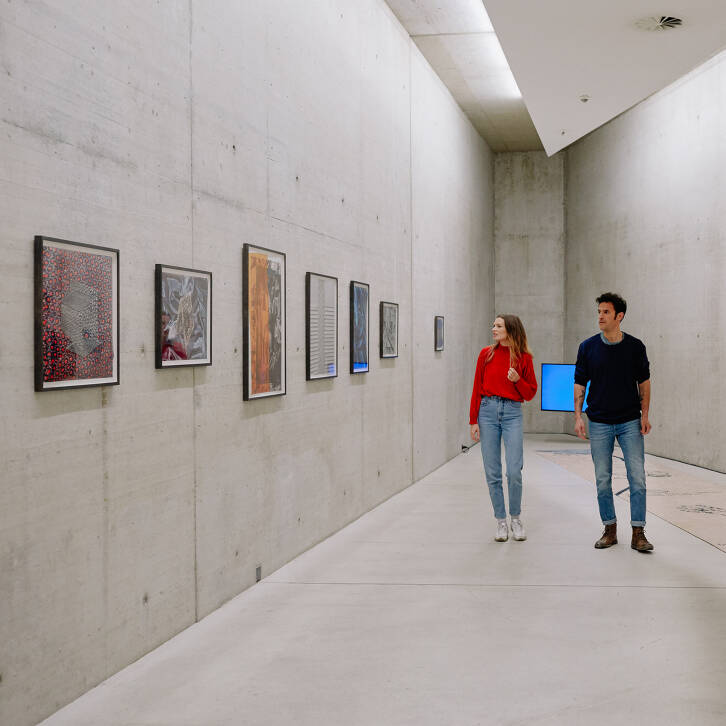
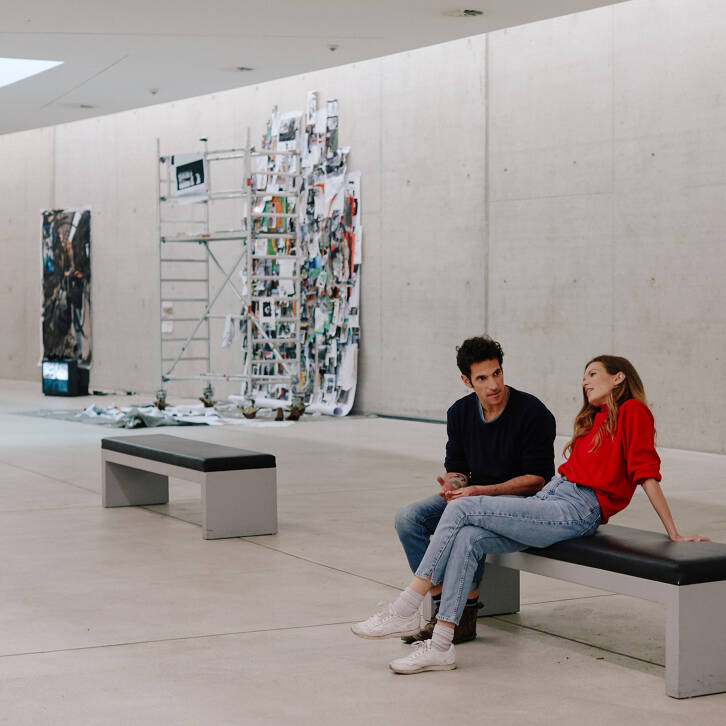
Be it art, architecture, theater, ballet, or music – Düsseldorf offers an unparalleled density of art and culture. Within a relatively small area, numerous museums and galleries provide extraordinary art experiences throughout the year.
The heart and soul of Düsseldorf's art scene is the Art Academy. Renowned names such as Joseph Beuys, Katharina Fritsch, Gerhard Richter, and Andreas Gursky have studied and taught there. Twice a year, the Art Academy invites visitors to its tour: that's when students showcase their new works.
Walking along the Rhine, visitors will pass the Kunstpalast, the NRW-Forum Düsseldorf, the Kunstsammlung NRW at Grabbeplatz, the Kunsthalle Düsseldorf, the KIT – Kunst im Tunnel and the Kunstsammlung NRW in the Ständehaus. Here, permanent and special exhibitions are dedicated to fine art.
Over 100 foundations and galleries complement the offerings with multimedia works and new media. The Schauspielhaus (theater) and the Oper am Rhein (opera) stage highly acclaimed productions. However, it's not just high culture that is highly valued in Düsseldorf; subcultural movements also find much appreciation in this cosmopolitan city. The vibrant music scene boasts world-renowned bands like Die Toten Hosen and Kraftwerk, and the urban art scene has gifted the city with numerous artworks.

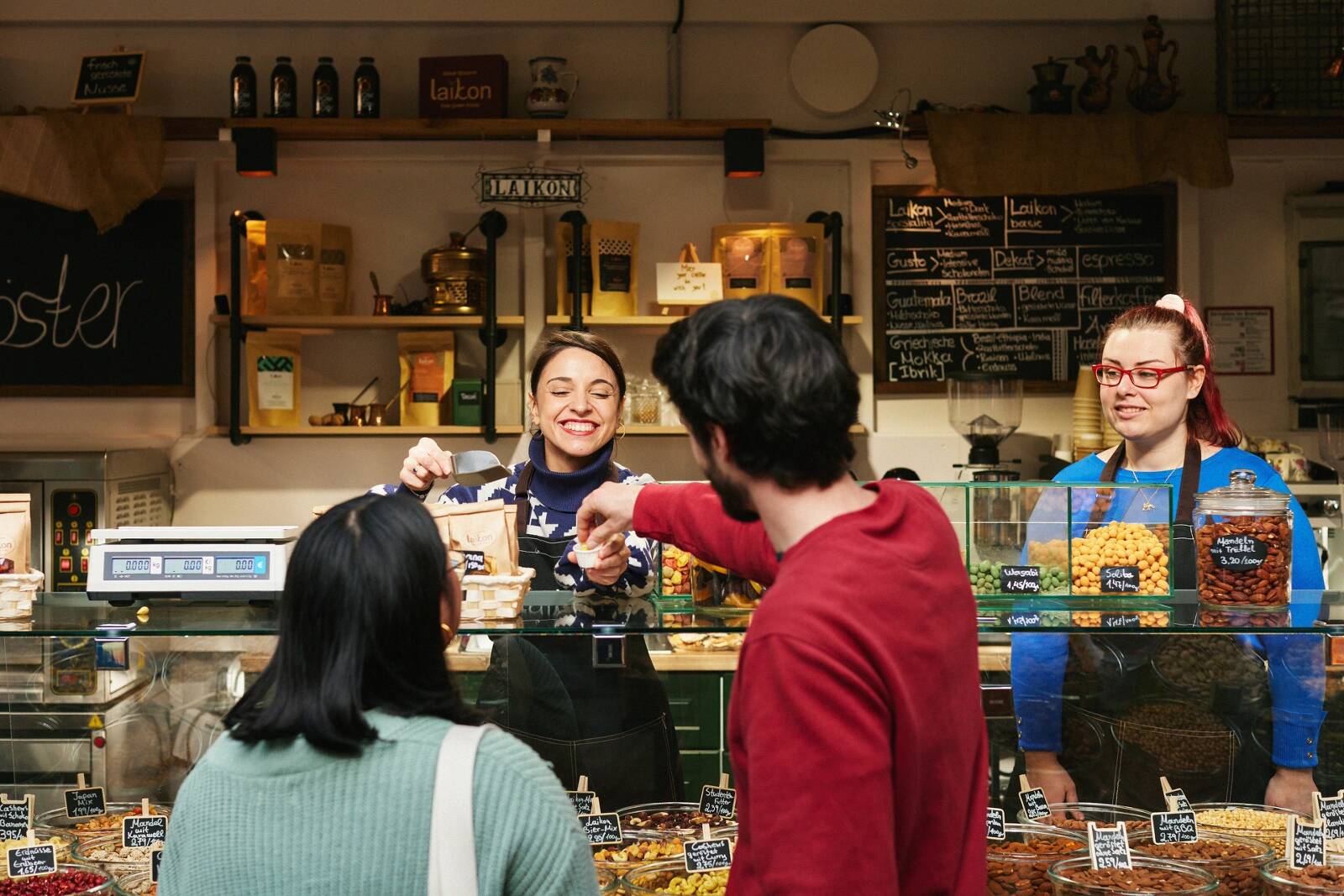
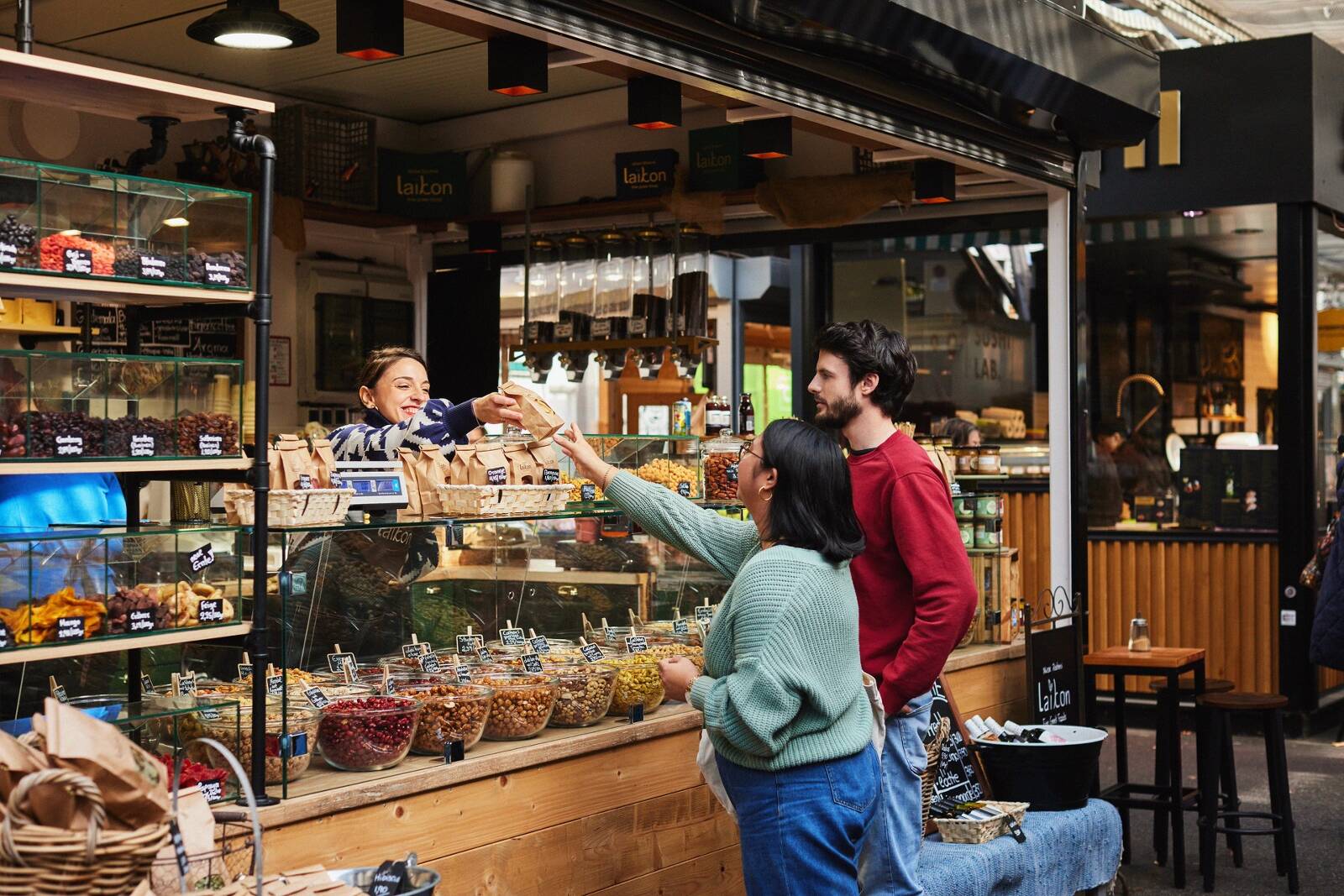
Shop at a food market, enjoy Michelin-level menus, or toast together in the Old Town after a theatre visit? In Düsseldorf, anything is possible. It's all about freedom, proximity, and a personal touch.
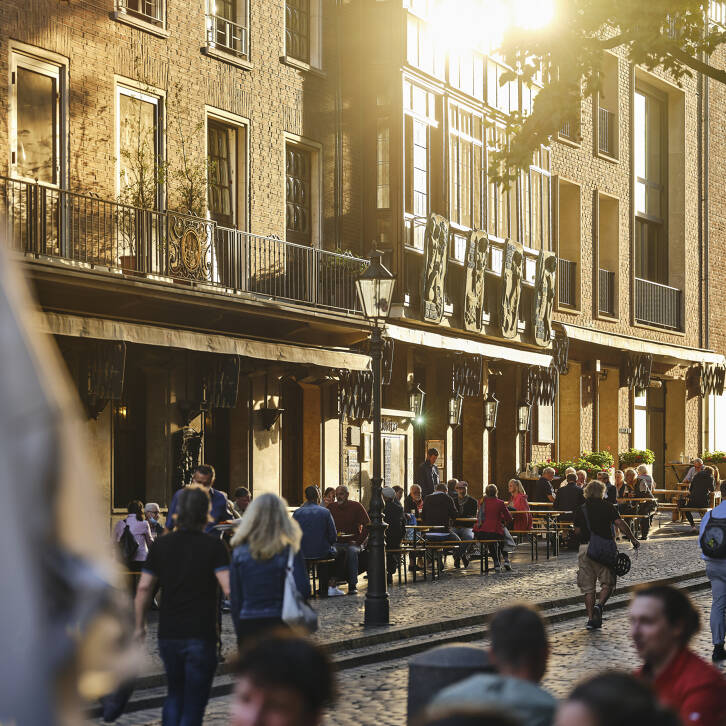
While cafés, restaurants, and bars open their doors in the alleys of the Old Town, known as the 'longest bar in the world', Altbier matures in the brewing cellars of local breweries according to centuries-old recipes. Approximately 260 gastronomic establishments are located here within half a square kilometer. Some breweries still use water from their own wells, while others share secret recipes for the finest roasted malt.
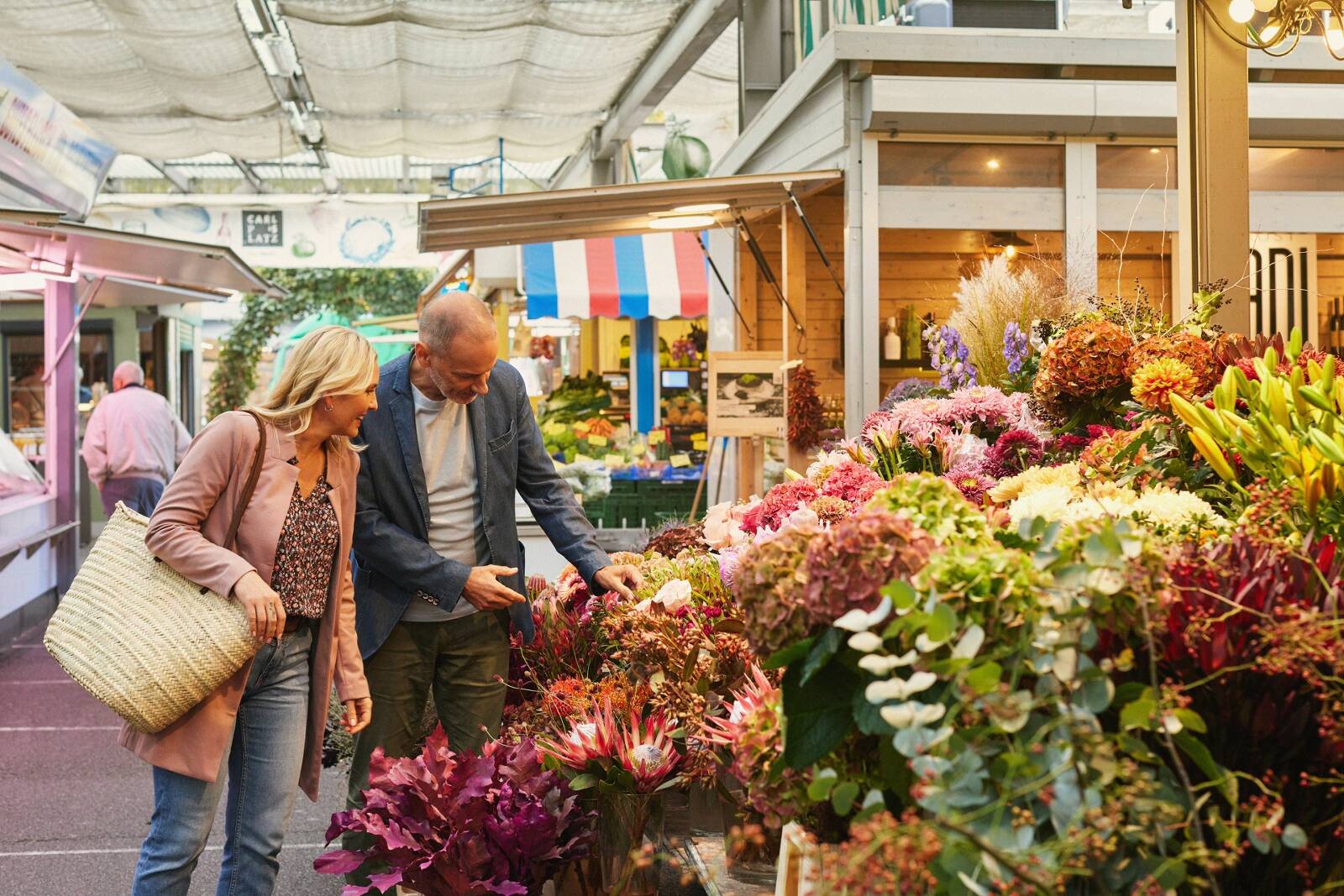
Carlsplatz offers not only exotic fruits, oven-fresh bread, and spicy cheese, but also ready-made delicacies – ranging from traditional Düsseldorf home cooking to Italian, Indian, French, and Persian dishes. In Little Tokyo, you can discover authentic Japanese cuisine. And for those seeking a particularly refined experience, one of the Michelin-starred restaurants awaits.

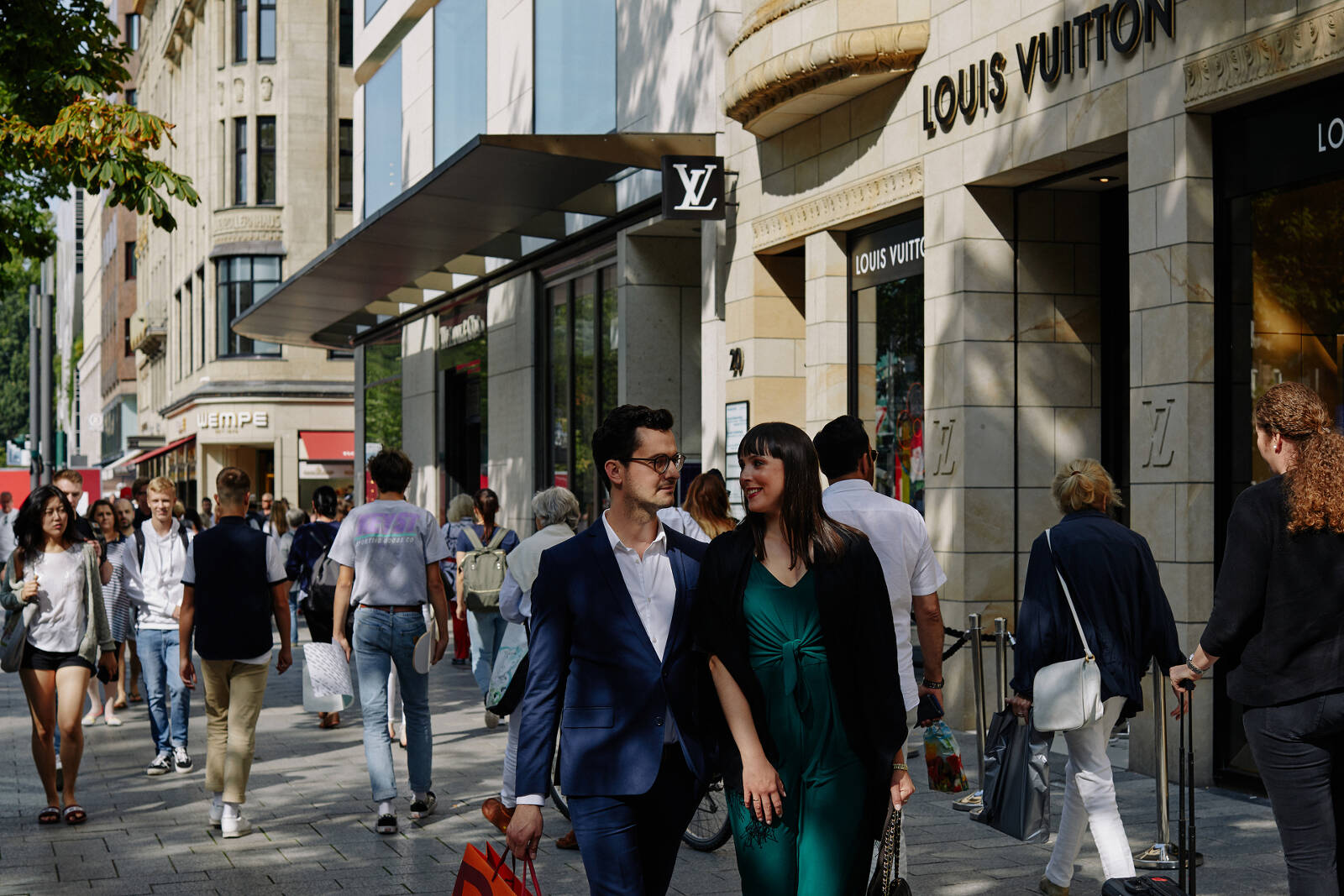
With its boulevards, festivals, concept stores, and trendy districts, Düsseldorf attracts fashion enthusiasts from all over the world. The most famous boulevard is the Königsallee, affectionately known as 'Kö' by Düsseldorf residents. It serves as both a magnificent promenade and an international landmark. The display windows of major brands seamlessly line its length.
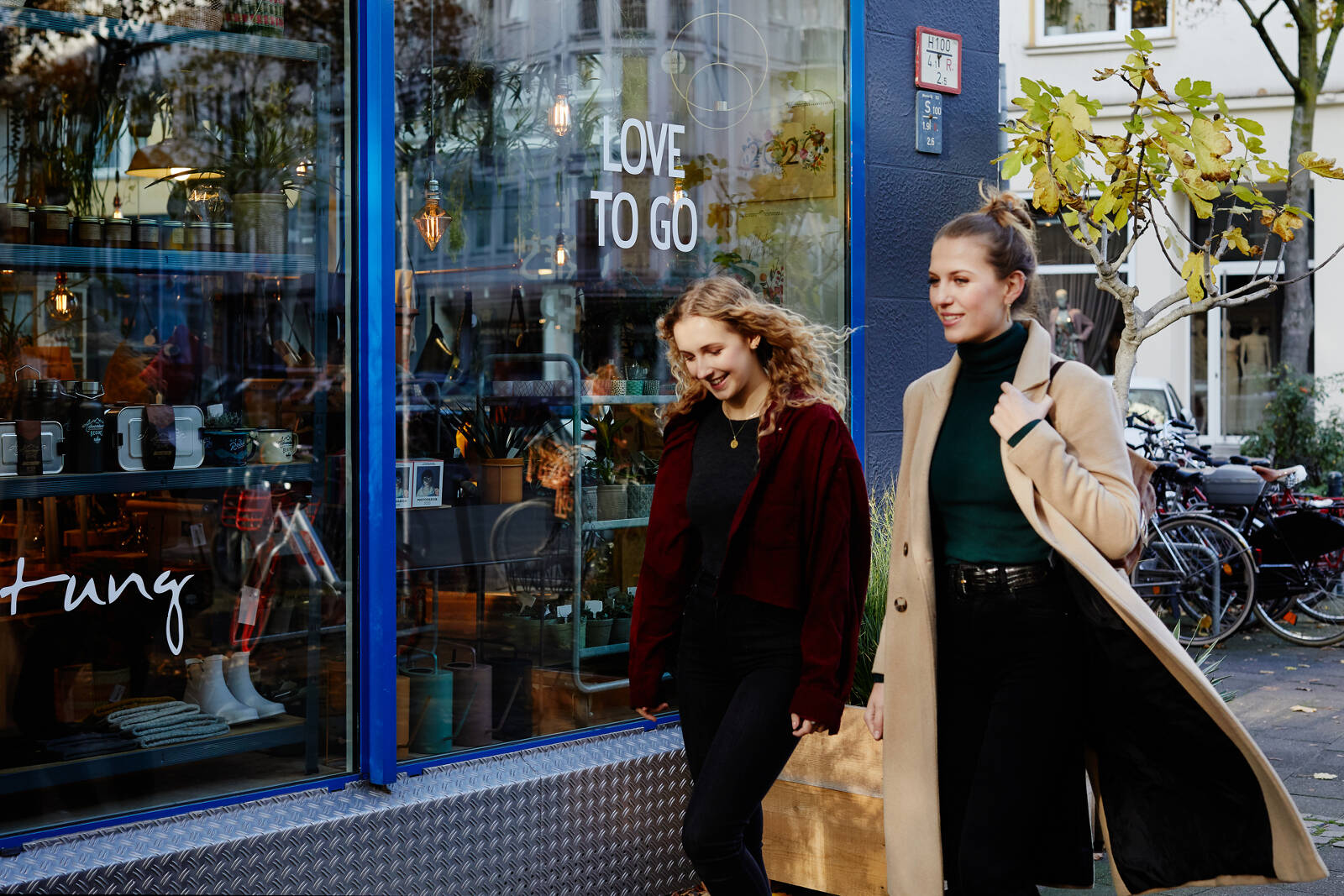
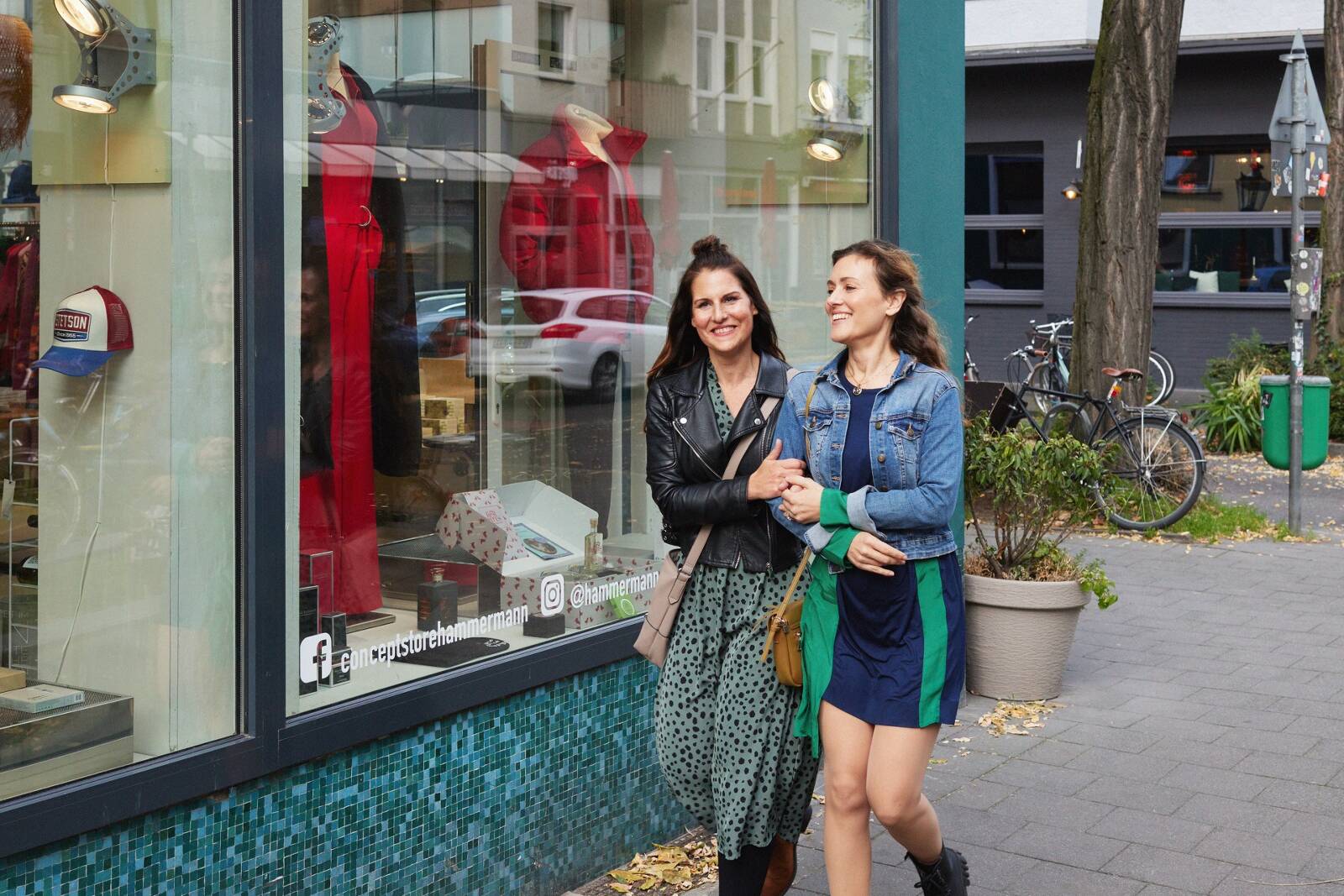
Away from the Kö, the trendy districts of Unterbilk and Flingern offer a delightful shopping experience in concept stores, owner-managed shops, and design studios. Nothing here is mass-produced. You'll also discover alternative clothing stores and vintage fashion venues. Small local labels, second-hand stores, and fair fashion boutiques feature inspiring fashion, handmade unique items, and innovative products. Shops that prioritize quality, environmental friendliness, and fair production conditions are just as prevalent in Düsseldorf as major brands. Since 2023, in collaboration with Visit Düsseldorf and COSH!, a Belgian sustainability platform, the Conscious Shopping Map Düsseldorf has been available, serving as a guide for sustainable shopping in the state capital. Visit Düsseldorf is the first German destination to partner with COSH!.