DSTNCMP-PREMIUMpartner


The small town at the foot of the Alps and the surrounding Kufsteinerland have a lot to offer: historical finds, stunning nature, excellent cuisine, and magnificent cultural highlights in the event calendar.
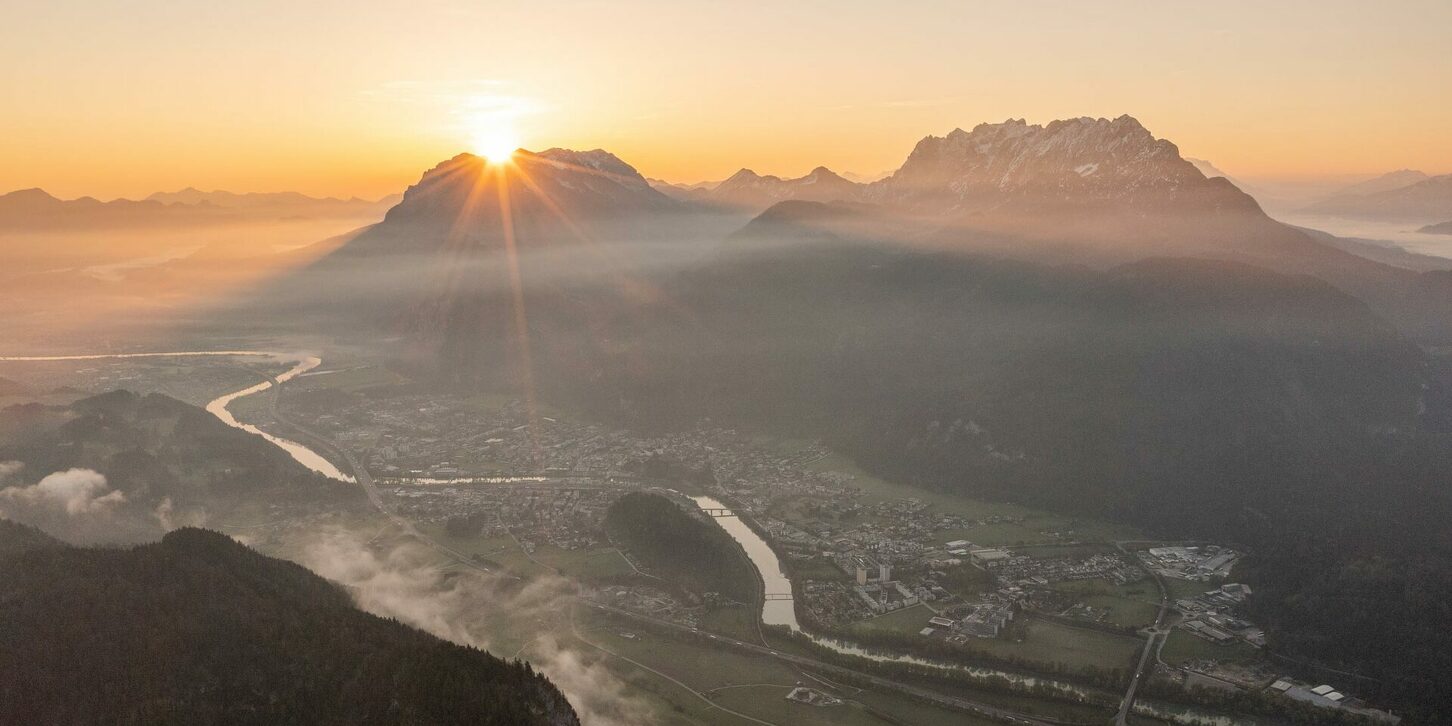
Kufsteinerland encompasses the city of Kufstein and 8 surrounding municipalities, covering a total area of 289 km2 and having 43,000 inhabitants. A very special tourist attraction is the Kaiser Mountains with the "Wilder Kaiser" (Wild Emperor) and the "Zahmer Kaiser" (Tame Emperor), which majestically rise above the region. Evidence of Tyrol's oldest settlement was found in the 30,000-year-old Tischofer Cave. However, not only nature but also culture plays a significant role in Kufsteinerland. With Erl and Thiersee, there are not just one, but even 2 Passion Play venues that attract numerous visitors every year. The spa center in Kufsteinerland is the health resort Bad Häring, offering numerous health tourism services.
While tourism plays a significant role, Kufsteinerland is also a major economic hub beyond that. Not only was the large Austrian retail chain SPAR founded here, but international companies such as Stihl, Sandoz, Novartis, and many others have also established themselves in Kufsteinerland. The well-known glass manufacturer Riedel Glass has its headquarters in Kufstein and produces high-quality hand-blown glasses on-site.
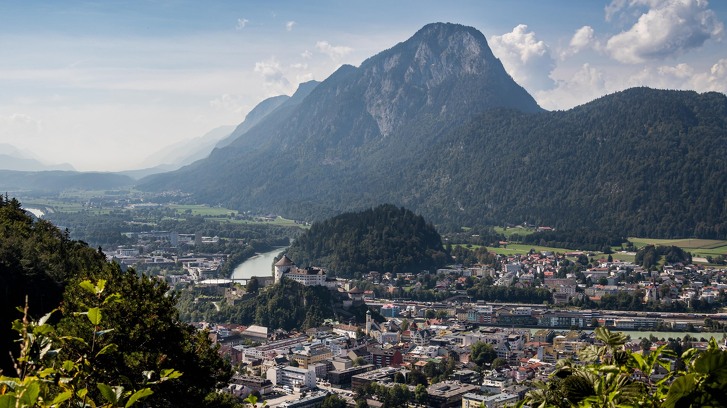
Kufstein is Tyrol's second-largest municipality, with nearly 20,000 inhabitants. The town has a very long history, with archaeological finds indicating that Tyrol was settled here approximately 30,000 years ago.
Due to its proximity to the German border, Kufstein was repeatedly at the center of disputes between Bavaria and Tyrol for many centuries.
In 1842, the first major company, a cement factory, settled in the town – marking the beginning of Kufstein as an industrial city. In addition to numerous well-known companies, a renowned university of applied sciences is now also located in Kufstein.
KUFSTEIN FORTRESS
Undoubtedly, the most important landmark is the Kufstein Fortress on the 90-meter-high fortress hill in the city center, first mentioned in the 13th century. The impressive Emperor's Tower, built between 1518 and 1522, is visible from afar. In the 18th century and during the occupation period after World War II, the fortress served as a prison.
Hero's Organ
Kufstein Fortress is home to the Hero's Organ, audible throughout the city, which is the largest outdoor organ in the world.
OLD TOWN
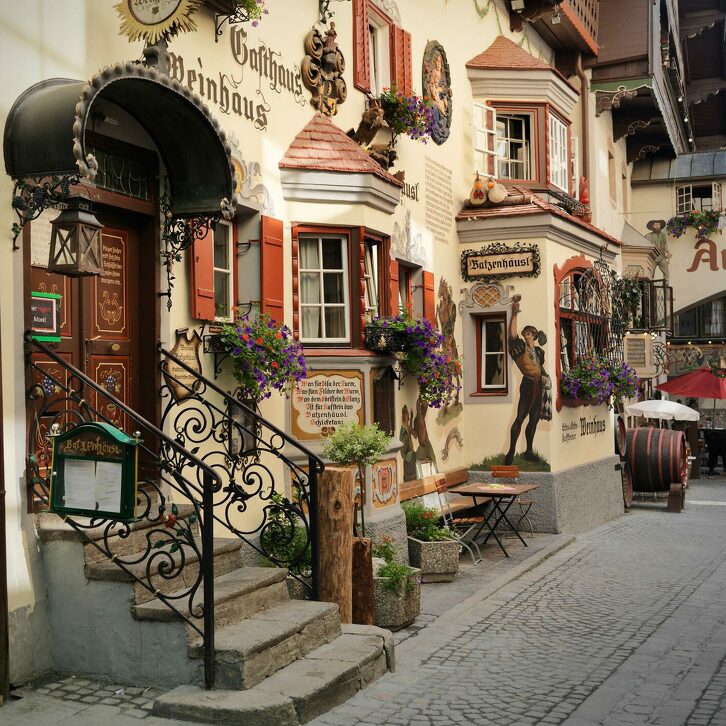
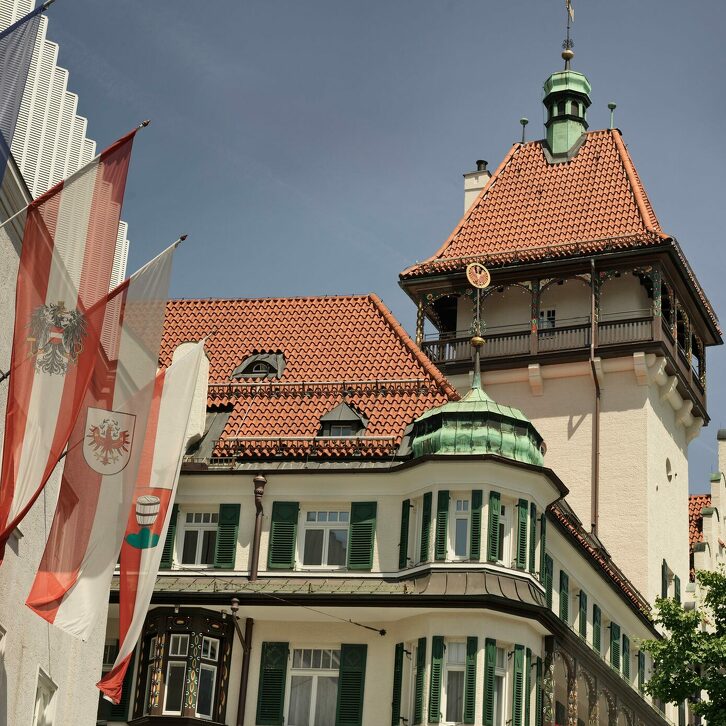
Parts of the Old Town, such as the Römerhofgasse, Kirchgasse, the lower town square, and the Inn promenade, are popular tourist destinations. This also includes the Weinhaus Batzenhäusl and the former inn, now the Restaurant & Boutique Hotel Auracher Löchl, where Karl Ganzer wrote the Kufsteinlied. Kufstein largely lost its typical Inn-Salzach style during a major fire in the Middle Ages, which destroyed almost the entire town at the time. However, some buildings on the Unterer Stadtplatz still feature characteristics such as gable walls, arcades (though built over), and large bay windows. Between the Oberer Stadtplatz and Madersperger Straße, there are several impressive Art Nouveau buildings, such as the Sparkasse building, the former Hotel Egger, today's Volksschule Stadt, and the Bundesrealgymnasium.
KUFSTEINLIED
In the Kufsteinlied – with lyrics and melody from 1947 by Karl Ganzer (1920–1988) – the fortress town is celebrated worldwide. This song is considered one of the most sung and best-selling (100 million copies) folk songs in the world. The song also gave the city the moniker "The Pearl of Tyrol" and the river the epithet "The Green Inn".

Kaiser Mountains Nature Reserve
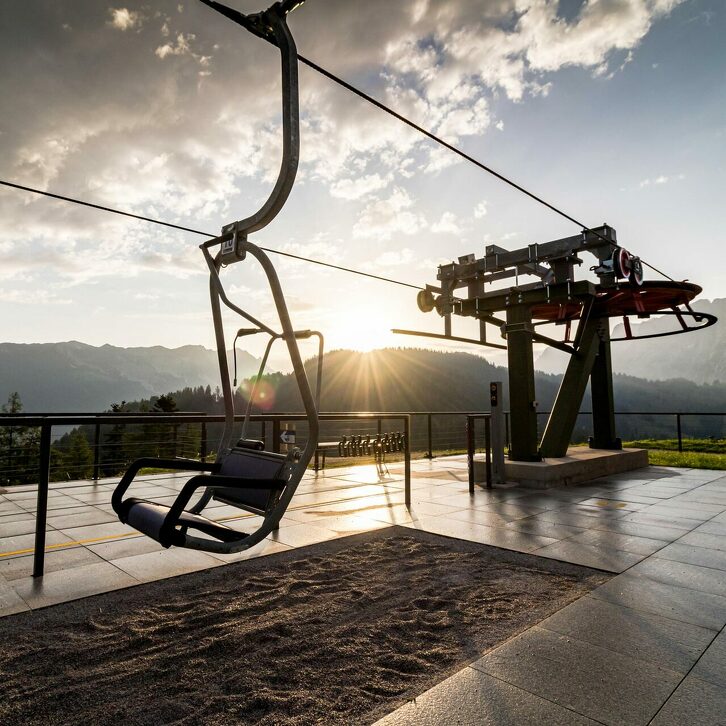
The Kaiser Mountains Nature Reserve, which includes all the peaks of the Wilder Kaiser and Zahmer Kaiser, covers an area of 102 km² and extends up to an altitude of 2344 m at Ellmauer Halt. The only artificial ascent aid is a chairlift to the Brentenjoch (Kaiserlift Kufstein). Further lift projects were not realized due to the nature reserve.
Kaiserlift
It was inaugurated in 1971. Even then, it offered an idyllic ride up to 1,200 m to the Brentenjochalm. For 40 years, the Kaiserlift Kufstein transported hikers and nature lovers to the Wilder Kaiser until it was shut down in 2011.
A significant investment was required for the operating license, but it was not profitable for the then-owner. A solution was sought for a long time until Stadtwerke Kufstein breathed new life into the lift from early 2014 to May 2015, completely renovating and revitalizing it. The turnstiles reopened punctually for the hiking season on May 1, 2015. This makes the Kaiserlift Kufstein one of ten single-seater chairlifts in all of Austria.
Kaisertal
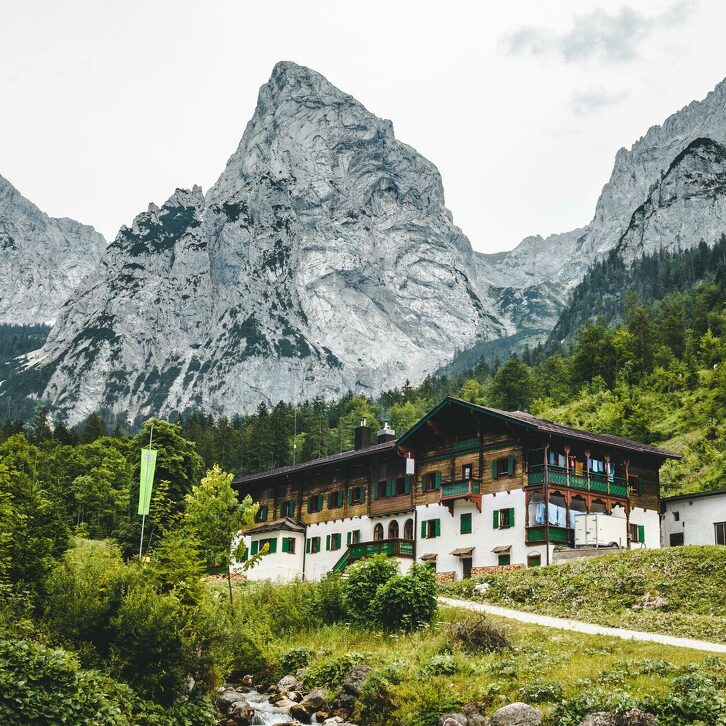
In 2016, the Kaisertal was voted the most beautiful place in Austria as part of the "9 Places - 9 Treasures" initiative. It was the last valley in Austria that could not be reached by vehicle.
Only in recent years has the Kaisertal become accessible via a tunnel, though exclusively for the approximately 35 residents of the valley. For everyone else, a tranquil ascent awaits, climbing 282 steps to an unparalleled reward: Natural idyll. Culinary experiences. Regional specialties. Rustic alpine huts. Traditional mountain inns. An untouched natural landscape.